
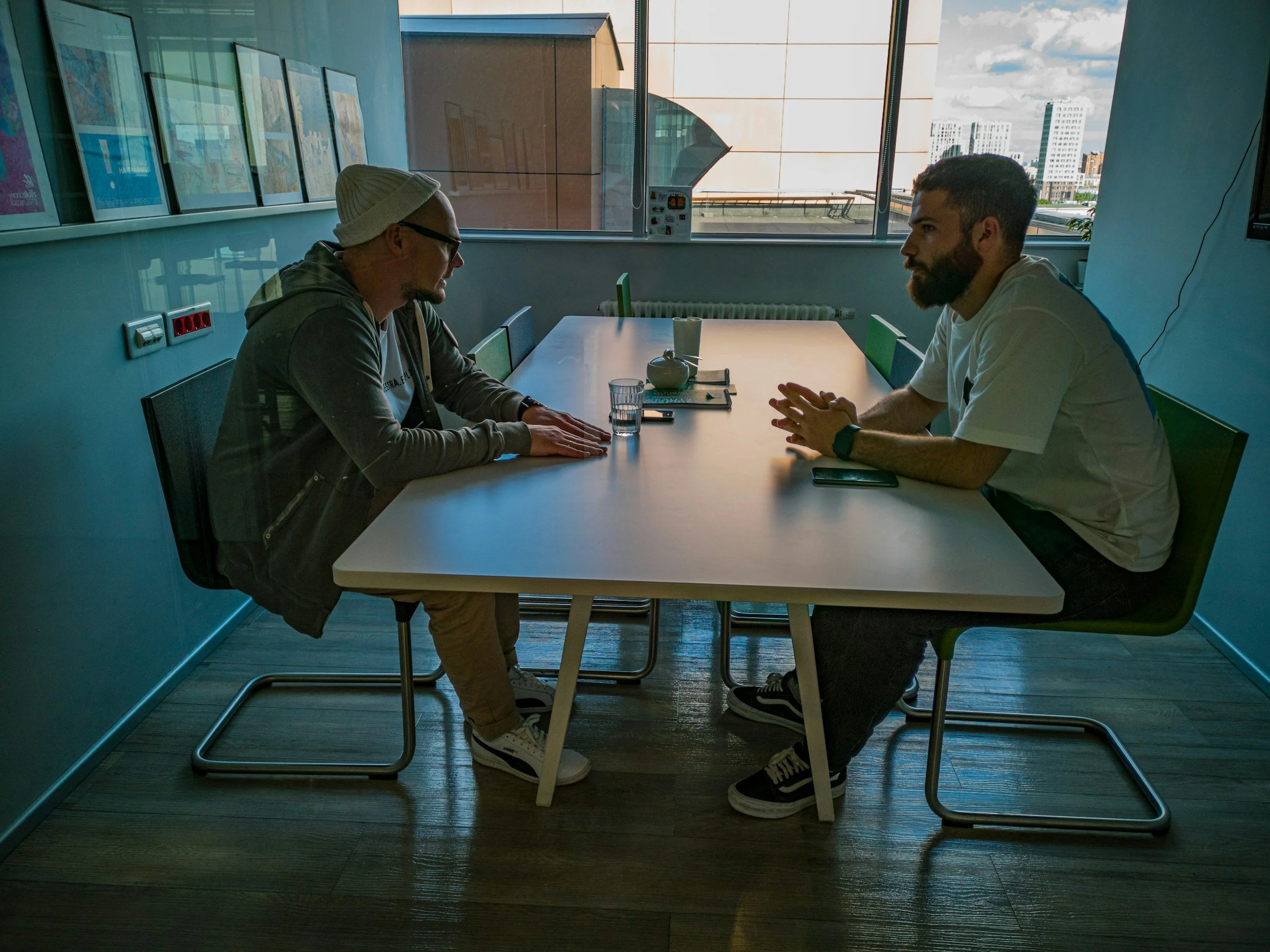
Leaning in for conversation
There's a pattern I see often in strong leaders — and it's almost always invisible to the person living it.
I've been working with a director who is decisive, fast-moving, and genuinely committed to his team's success. When something goes wrong, he fixes it. When someone struggles, he steps in. It looks like leadership. It feels like support.
But somewhere along the way, he stopped being a director and started working for his managers.
When they hit a wall, he didn't just coach — he took over. He did the work himself. And over time, what had started as helpfulness had become a habit that was quietly undermining everyone, including him.
When he finally saw the pattern clearly, he was startled. The gap between his intention — to be a strong, supportive leader — and the actual impact — a team growing dependent, a director growing depleted — was larger than he'd realized.
Awareness was only the beginning.
One of his managers had grown so comfortable with the dynamic that she began actively pushing work back to him — resisting the people management responsibilities that were squarely within her role. What was his pattern had become her expectation.
Then it escalated. Her team pushed back hard. Suddenly he was managing HR conversations, having difficult developmental discussions with her, working with his own manager above him, and trying not to snap at someone whose resistance was genuinely wearing on him.
He was holding four roles at once — and in each one, the same internal work kept surfacing.
Slow down. Breathe. Get curious before getting reactive.
The through-line wasn't strategy. It was emotional regulation.
His ability to stay grounded when everything around him was heating up — that's what made the hard conversations possible. That's what kept relationships intact while difficult things got said. That's what allowed him to hold a boundary without burning a bridge.
This is where leadership gets genuinely hard. And genuinely interesting.
Because the real work isn't in the doing. It's in noticing who you're being in the hardest moments — when you're frustrated, when the situation is messy, when there's no clean answer, and people are watching how you carry it.
If this story resonates — if you're navigating something similar or wondering whether you have the inner steadiness it takes — I'd love to have a conversation. You can reach me at sharon@successfultransitions.ca